Canary Islands eSIM & Spain Beach Holiday Guide 2026

Roami Team
Roami offers reliable eSIM plans, serving over 1 million travelers annually, and supports automatic local network switching to help travelers stay connected globally.
📑 Table of Contents

Which plan, in one sentence: The best Spain travel eSIM for beach holidays is a multi‑network plan with automatic carrier switching across Movistar, Orange, and Vodafone. This ensures reliable connectivity during peak congestion hours on the Costa del Sol, in the Canary Islands, and across the Balearic Islands. For a 7‑day trip, we recommend 20–30 GB for moderate users. Prioritize a plan that can reselect the strongest carrier automatically, because peak‑season congestion on the coast affects each network differently.
Why Beach Holidays Need a Different eSIM
Spain welcomed over 85 million international visitors in 2023, with the majority heading to its sun‑drenched coasts. But staying connected on a Spanish beach holiday presents unique challenges that city breaks simply don’t face.
The problem isn’t coverage—it’s congestion.
In Spain’s popular resorts like Benidorm, Magaluf, and Playa del Inglés, evening data throughput can fall to a fraction of afternoon levels. Thousands of tourists simultaneously upload sunset photos, stream Netflix, make video calls, and check restaurant reviews—all overwhelming local towers.
According to data from Spain’s telecom regulator (CNMC), the Mediterranean coast has dense 4G and growing 5G coverage in urban resort centers, but connections weaken sharply in secluded coves. The Canary Islands rely on submarine cables and satellite backhaul for some outer areas, which affects latency more than raw speed. The Balearic Islands experience extreme seasonal congestion, with data traffic spiking sharply during July and August compared to winter months.
For travelers to Spain, this means an eSIM that can switch between multiple local carriers provides a measurable advantage over a single‑carrier plan. Orange and Movistar cover nearly all of Spain’s coastal population with 4G, but their performance varies considerably by specific beach location.
Real‑world example: On the Costa del Sol, Movistar’s network blankets the coastal strip from Nerja to Estepona, while Yoigo offers strong performance in urban resort centers but thinner coverage in the hills above Marbella. Vodafone covers most of the same strip but has patchier spots between Nerja and Almuñécar. A multi‑network eSIM automatically chooses the strongest available signal at your exact location—no manual switching required.
Data usage patterns: beach vs city
- Daytime: Minimal data use during sunbathing hours.
- Evenings: Heavy streaming, social media uploads, video calls.
- 7‑day average: 6–8 GB per person (vs 4–5 GB for general city tourism).
- Why higher: More photo/video sharing from beach activities and coastal scenery.
Network congestion follows a predictable daily rhythm:
- Morning (8 AM–12 PM): Moderate use for checking directions, breakfast spots, and daily plans.
- Afternoon beach time (12 PM–5 PM): Lowest data usage – best window for large downloads or updates.
- Evening (6 PM–11 PM): Heaviest congestion – speeds can fall dramatically in resorts like Benidorm or Playa del Inglés.
The takeaway: Beach holiday connectivity depends on carrier density in your destination, network capacity during peak season, and your eSIM’s ability to automatically select the strongest available signal. A single‑carrier plan may work fine in central Málaga but struggle on a remote Fuerteventura beach where a different carrier has the only tower. Multi‑network capability is not a luxury—it’s a practical requirement.
Top Pick: Best eSIM for Costa del Sol & Islands
After comparing all major providers (you can see our detailed comparison for the full breakdown), Roami stands out as the best choice for beach holiday travelers. For the complete overview of Spain eSIMs, see our Spain eSIM complete guide.
| Feature | Why It Matters for Beach Holidays |
|---|---|
| Auto.switching across Movistar, Orange, and Vodafone | Ensures you always connect to the strongest, least congested network—critical during evening peak hours in resorts. |
| 24/7 human support | Beach holidays don’t follow office hours; get help at 10 PM or 7 AM if needed. |
| No speed throttling | Consistent speeds for streaming and video calls, unlike some budget plans that slow down after a few GB. |
| Easy top‑up via app | Extend your stay or share data with family instantly—no need to contact support. |
| Hotspot allowed | Share your connection with tablets, laptops, or travel companions. |
Our Recommendation: For most 7‑day beach holidays, choose Roami’s 10 GB 3-day plan ($9.99) or its unlimited 3-day plan ($9.99) for moderate use; heavier streamers and remote workers usually restack a second 3-day plan (entry plans start at just $1.99).
👉 Compare Spain eSIM plans – match a plan to your island or coastal destination before you book.
Still unsure? Check our price guide for budget comparisons, or the troubleshooting guide if you run into issues.
Costa del Sol: What Beach Travelers Need From a Spain eSIM
The Costa del Sol’s resorts have some of Spain’s densest mobile coverage, but summer evenings bring heavy congestion. In August, throughput along the Fuengirola–Marbella corridor can fall sharply in the evening. A multi-network eSIM that auto-switches to the least congested carrier keeps you connected when single-carrier plans slow down.
Málaga, Marbella, and Puerto Banús have strong 5G from all four Spanish carriers. Coverage thins toward the inland hills above Marbella and between towns on the N-340 coastal road. For a full carrier-by-location breakdown, see our Spain eSIM coverage guide.
Costa Brava & Costa Blanca eSIM Coverage at a Glance
Spanish resort towns like Lloret de Mar and Benidorm have excellent 5G, but the famous coves (calas) between towns often have limited signal. Benidorm’s high-rise hotels can create signal shadows on lower floors — higher floors usually get a better line of sight to towers.
The key beach-specific rule: in towns, any carrier works; in secluded coves and natural parks (Cap de Creus, the Ebro Delta), expect patchy or no signal and download what you need in advance. For carrier-by-carrier coverage across every coastal town, see our Spain eSIM coverage.
Canary Islands: Spain eSIM Essentials for Beach Travel
The Canary Islands have 4G along virtually all coasts and resorts, plus 5G in most resort zones, but remote beaches (Fuerteventura’s Cofete, parts of Lanzarote’s west coast) and the interiors of Tenerife and Gran Canaria have little or no signal. Movistar and Orange offer the widest coverage across the archipelago.
Download offline maps and entertainment before heading to remote beaches or the island interior. If you work remotely from the islands, budget for more data than a typical beach trip. For a full island-by-island carrier breakdown, see our Spain eSIM network coverage.
Balearic Islands in Peak Season: Spain eSIM Congestion Notes
The Balearics face extreme seasonal congestion — Mallorca’s population more than doubles in August, and Ibiza’s nightlife zones get extremely congested in the small hours. A multi-network eSIM that switches to the least crowded carrier is essential here.
Mallorca’s resorts and Ibiza’s towns have strong 5G (Orange leads in Ibiza); Menorca’s Biosphere Reserve status keeps development—and speeds—modest, with no signal in many isolated coves. For a full island-by-island carrier comparison, see our Spain eSIM coverage overview.
Which Costa towns lose signal in August — and why bars do not help?
Every coastal town in Spain has good coverage in June and terrible throughput in August, and the two facts are not in conflict. Coverage is about how far a signal reaches; throughput is about how many people are asking for it at once. A beachfront that holds nine hundred people in May holds fifteen thousand in August, and the cells serving that frontage did not change.
The places where this bites hardest are the ones with the densest seafront and the least inland depth: Torremolinos, Fuengirola and Marbella on the Costa del Sol; Benidorm on the Costa Blanca; Lloret de Mar on the Costa Brava; Magaluf, Palma beach, Sant Antoni and Playa d’en Bossa in the Balearics. In all of them the pattern repeats across the day.
| Time | What the network does | What still works |
|---|---|---|
| 08:00–10:00 | near-normal speeds, cells lightly loaded | everything, including uploads |
| 11:00–14:00 | busy, throughput drops on the beach frontage | maps, messaging, slow photo upload |
| 15:00–18:00 | peak beach hours, video stalls on the sand | messaging, occasional page loads |
| 20:00–01:00 | worst window: everyone on the promenade at once | messaging, calls over wifi |
| 02:00–07:00 | fast again, and nobody is awake to use it | everything |
Three moves make August usable. Shift the heavy work to the morning, when uploading photos and downloading maps takes a fraction of the time it will take at six in the evening. Walk two hundred metres inland, because the cell serving the second row of streets is a different, far less loaded one than the cell serving the sand. And drop to 4G deliberately in the worst hours — 5G capacity is saturated first in these areas, so locking the phone to 4G sometimes produces a slower-looking but actually working connection.
What no plan fixes: video calls from a crowded beach in the second week of August. If a call matters, take it from the room or a café on a side street, and treat the beach as a messaging environment.
Does your phone survive a Spanish beach day?
The eSIM will be fine. The handset is the weak part of the chain, and three of its failure modes are caused by the beach rather than by the network.
Heat is the one that ends the day. A phone left in a bag on the sand in direct sun reaches the high thirties or low forties Celsius inside the bag, and both iOS and Android respond the same way: charging slows and then stops, the screen dims, and beyond roughly 45 °C the device shuts down and displays a temperature warning. A phone that has been in the sun also charges badly for the next hour, because the battery management refuses to accept current above about 35 °C. The practical rule is that the phone charges in the room, in the shade, in the middle of the day — not on the beach, and not on the dashboard of a rental car.
Sand and salt are the slow damage. Sand works into the speaker grille, the microphone mesh and the charging port, and salt water leaves a residue that corrodes the port contacts over a fortnight. A modern phone survives being splashed; it does not survive being plugged in wet, which is where the “liquid detected in the charging port” warning comes from, and that warning can persist for a day and cost you charging entirely.
A phone in a bag is a worse antenna. Coverage maps are drawn for a handset in the open. Inside a closed bag, under a towel, in a pocket against the body, the signal drops by several decibels and the phone responds by raising transmit power — which costs battery and produces the familiar pattern of a phone that is warm, at 40% by mid-afternoon, and slow to load anything.
The strategy that follows is not what most travelers expect: on a beach day, the connectivity plan matters less than the phone’s thermal budget. A cheap 5 GB plan is entirely sufficient when the phone spends four hours in a bag; the travelers who run out of data on the coast are almost always the ones whose phones were in their hands all day, in the sun, on 5G, uploading.
If you need to stay reachable, three things help more than any setting: a zip bag kept in shade rather than sun, a power bank used in the evening when the phone has cooled, and a habit of switching to airplane mode on the sand — the phone stops hunting for a weak cell, the battery lasts, and nobody calls you at the one moment you are in the water.
Do chiringuitos, beach clubs and hotel wifi actually work?
Coastal Spain has three tiers of wifi, and their reliability is roughly the inverse of their price.
Chiringuitos almost never have usable wifi. A beach bar with thirty tables and one access point on the terrace is a bar that has given up on the internet; when a password exists at all it is on the menu or on a card by the till, and the realistic expectation is one to three Mbps shared with everyone at the bar. Fine for sending a message, useless for a photo upload, hopeless for a call.
Beach clubs usually do, and it is genuinely fast. The larger clubs on the Costa del Sol and in Ibiza run proper networks because their customers expect to post from the sun lounger. The catch is that access is often tied to a minimum spend or a day-bed booking, and the password rotates.
Hotel wifi is where the variance lives. City hotels in Málaga and Barcelona are usually fine. Resort hotels in the Balearics and the Canaries are fine in the lobby and weak at the pool, because the pool is a large outdoor space with hundreds of devices and no ceiling to mount access points on. A fair number of resorts still sell a premium tier, which is worth paying for only if you plan to work.
| Where | Typical speed | Reliability | Use it for |
|---|---|---|---|
| Chiringuito | 1–3 Mbps | low | messaging |
| Beach club | 10–50 Mbps | medium, spend-dependent | photos, short calls |
| Hotel lobby | 10–40 Mbps | medium | calls, uploads |
| Hotel room | 2–15 Mbps | varies by floor | email, browsing |
| Hotel pool | 1–5 Mbps | low | nothing important |
| Ferry terminal | 2–10 Mbps | low | checking in |
The planning conclusion is simple and it is the same one every section of this guide reaches from a different direction: on the coast, the eSIM is the connection and wifi is a bonus that fails precisely when the beach is full. Download what you need in the morning on mobile data, use hotel wifi for the big uploads in the evening, and treat any wifi password offered on a beach as a pleasant surprise rather than a plan.
What happens on the ferry to Mallorca, Ibiza and Tenerife?
Spanish ferry crossings are long enough that connectivity becomes a planning question rather than a detail. The pattern is identical on every route: signal for the first half hour out of port, nothing in the middle, signal again as you approach the destination.
| Route | Crossing time | Time without signal |
|---|---|---|
| Barcelona – Palma | 7–8 hours, usually overnight | most of the night |
| Valencia – Palma | 7–8 hours, usually overnight | most of the night |
| Barcelona – Ibiza | 8–9 hours, usually overnight | most of the night |
| Dénia – Ibiza | 2–4 hours, fast ferry | roughly the middle third |
| Dénia – Palma | 5–6 hours | the middle half |
| Tenerife – La Gomera | about 50 minutes | brief gaps only |
| Tenerife – La Palma | 2.5–3 hours | the middle section |
| Gran Canaria – Tenerife | about 1 hour 20 | short gaps |
Two things follow. Overnight crossings solve the problem by scheduling. On the Barcelona and Valencia sailings you board in the evening, lose signal, sleep, and wake up with bars again — which is why these routes are the least painful in Spain despite being the longest. Day crossings need preparation: download the offline map of the island, the hotel address, the ferry ticket and any transfer confirmation before boarding, because the last twenty minutes before arrival is when everyone on the boat is trying to do exactly that at once.
Onboard wifi exists on the larger vessels and is priced like satellite bandwidth, because that is what it is. It is adequate for messaging and a weather check, not for work. If a crossing falls on a working day, treat it as a day off the network rather than paying for a connection that will disappoint.
One habit worth keeping: when the signal returns, the phone does not always re-register cleanly on the island’s network. If you arrive with bars but no data, toggle airplane mode for fifteen seconds — the handset will attach to the local cells properly, and the fix takes less time than reading the rest of this paragraph. Travelers continuing to Morocco by ferry from Tarifa or Algeciras have a different problem, covered in our multi-country guide.
Your plan died on the coast — where do you buy a replacement today?
This is the scenario that separates a plan from a plan with a fallback: it is Saturday afternoon in Nerja, the eSIM has stopped, and the next three days include a rental car pickup and a ferry. Coastal Spain has more places to buy connectivity than most visitors realise, but the opening hours are the constraint.
| Where | What it sells | When it is open | Realistic time cost |
|---|---|---|---|
| Airport arrival hall (MAD, BCN, AGP, PMI) | carrier prepaid SIMs, vending machines | first to last flight | 15–30 minutes |
| Carrier shop in a resort town | Movistar, Orange, Vodafone, Yoigo prepaid | Mon–Fri 10:00–14:00 and 17:00–20:00; Saturday mornings | 30–60 minutes, passport needed |
| El Corte Inglés | prepaid SIMs, top-ups, some eSIM vouchers | Mon–Sat, all day | 20–40 minutes |
| Phone House and similar chains | prepaid SIMs across carriers | Mon–Sat, mall hours | 20–30 minutes |
| Supermarket (Carrefour, Alcampo) | budget prepaid SIMs, top-up vouchers | long hours, often Sunday | 10–15 minutes |
| Hotel reception | nothing, but they know who is open | always | the most useful five minutes you will spend |
Four rules make this survivable.
Saturday afternoon is the worst possible moment. Spanish retail keeps Saturday mornings and closes on Sunday, and the coastal towns that stay open for tourists are the chains and the supermarkets, not the carrier shops. If a plan is going to fail, it will fail at 14:00 on a Saturday.
A passport is required, everywhere, for a Spanish prepaid line. There is no tourist exception: Royal Decree 424/2005 applies to prepaid SIMs and to eSIMs alike, and a shop that sells you a line without registering it is not doing you a favour. Carry the passport on the day you intend to buy, not the driving licence.
An international eSIM bought online is still the fastest replacement, because it needs no shop, no passport and no queue — but it needs wifi to buy, and if the plan is dead the wifi has to come from somewhere. That is the argument for buying the second plan before the first one fails, or for keeping one bar of hotel wifi access in reserve.
Do not buy the cheapest card in the supermarket for a data-heavy trip. The budget prepaid brands sold at supermarket tills are cheap because they are thin on data and slow to activate; they are a fine bridge for messaging and maps, and a poor choice if the next three days involve tethering a laptop.
The overall strategy for a coastal holiday is two plans rather than one: the main eSIM that covers the whole trip, and a small second plan — even a 1 GB one — installed and unused, from a different provider. It costs a few dollars, it requires no shop on a Saturday afternoon, and it converts a trip-ending failure into a five-minute switch.
What the replacement actually costs, in time. A carrier shop visit on a weekday morning is 30 to 60 minutes once you count the queue, the passport scan and the activation wait; the same purchase at an airport counter is quicker because the staff do nothing else, but only if your flight lands when the counter is staffed. A supermarket SIM takes ten minutes and often works on a Sunday, which is exactly when nothing else does. Buying a second eSIM online takes four minutes and can be done from a sun lounger, provided you have wifi — which is why the second plan is worth buying before you leave home rather than after the first one fails.
The travelers who never have this problem are not the ones who bought the best plan. They are the ones who arrived with two, and never needed the second.
Data Calculator: How Much Spain eSIM Data Do You Need?
Understanding your actual consumption helps you buy the right plan—no overpaying, no running out mid‑trip.
Average daily usage for beach activities
| Activity | Data per use |
|---|---|
| Navigation (Google Maps) | 150‑300 MB/day |
| Social media (posts, stories, reels) | 400‑800 MB/day (active user) |
| Messaging (with photos/videos) | 100‑200 MB/day |
| Video streaming (SD) | 1‑2 GB/hour |
| Video streaming (4K) | 3‑5 GB/hour |
| Video call (HD) | 500 MB‑1 GB per 30 min |
| Music streaming (standard quality) | 100‑150 MB/hour |
| Cloud photo backup | 200‑500 MB/day |
7‑day trip estimates
| Usage Profile | Daily Average | Total (7 days) | Recommended Plan |
|---|---|---|---|
| Light (maps, messaging, occasional social) | 600 MB – 1.5 GB | 5‑10 GB | 10‑15 GB |
| Moderate (social uploads, evening streaming, daily calls) | 3‑5 GB | 21‑35 GB | 20‑30 GB |
| Heavy (daily streaming, remote work, constant sharing) | 5‑8 GB | 35‑56 GB | 30‑50 GB |
| Family sharing (2‑4 users tethering) | 8‑15 GB | 56‑105 GB | 50‑100 GB |
Three beach‑specific factors:
- More photos/videos – bright sunlight, coastal scenery, water sports produce far more photo data than city travel.
- Hotel Wi‑Fi varies – many coastal resorts have slow or overloaded Wi‑Fi. Having a reliable eSIM backup is essential.
- Tethering is common – if you share your hotspot, add 50‑100% to your estimate.
Our advice: For a 7‑day Costa del Sol or Canary Islands beach holiday, a 20 GB plan is comfortable for most moderate users. For the Balearics or longer stays, choose 30 GB or more. If sharing with family, double it.
Matching a Spain eSIM to a Coastal Itinerary
Decide which network matters where you are going
- Costa del Sol, Costa Blanca, Costa Brava resorts: any carrier works in towns, but auto‑switching across Spain’s major networks gives the best experience during peak congestion.
- Canary Islands: prioritize plans using Movistar and Orange networks.
- Balearic Islands: Orange in Ibiza and Mallorca’s coast; Movistar in Mallorca’s mountains; auto‑switching is highly recommended.
- Mixed mainland + islands: a multi‑network eSIM is the only reliable option.
- Remote beaches (Cabo de Gata, Cofete, Menorcan coves): accept that coverage may not exist—download everything offline in advance.
Size the data to the beach day, not the city day
| Trip Length | Light | Moderate | Heavy | Family (4) |
|---|---|---|---|---|
| 3‑5 days | 5‑10 GB | 10‑15 GB | 15‑30 GB | 20‑40 GB |
| 7‑8 days | 10‑15 GB | 15‑25 GB | 30‑50 GB | 50‑80 GB |
| 10‑14 days | 15‑20 GB | 25‑40 GB | 50‑75 GB | 80‑120 GB |
| 14+ days | 20‑30 GB | 40‑60 GB | 75+ GB | 120+ GB |
Check the terms that decide a coastal trip
- Carrier switching – the most important feature for beach travel.
- Voice number – only needed if you plan to book restaurants (ElTenedor) or use ride‑hailing (Cabify). Most travelers only need data.
- Tethering allowed – confirm if you plan to share.
- Plan flexibility – top‑ups and mid‑trip changes are valuable.
- 24/7 support – essential for troubleshooting during odd hours.
Compare the three brands that matter here
| Provider | Networks Used | Best For | Limitation |
|---|---|---|---|
| Roami (⭐ Top Pick) | Movistar, Orange, Vodafone (auto‑switch) | Multi‑destination, congestion handling, 24/7 support | Smaller brand (but serves over 1 million travelers annually) |
| Airalo | Orange (single network) | Budget, simple plans | No auto‑switching |
| Holafly | Multi.network | Unlimited data | Hotspot capped at 1GB/day |
| Nomad | Not disclosed | Flexible amounts | Network partner not published |
| Orange Holiday | Orange only | Direct carrier | No multi‑network |
| Movistar (in-store prepaid) | Movistar only | Rural reach | Requires in-person purchase |
Our clear recommendation: For beach holidays, Roami’s multi‑network eSIM provides the most reliable connectivity thanks to automatic carrier switching, with entry plans from $1.99.
Spain eSIM Installation & Troubleshooting Tips
Install on hotel wifi, not at the airport
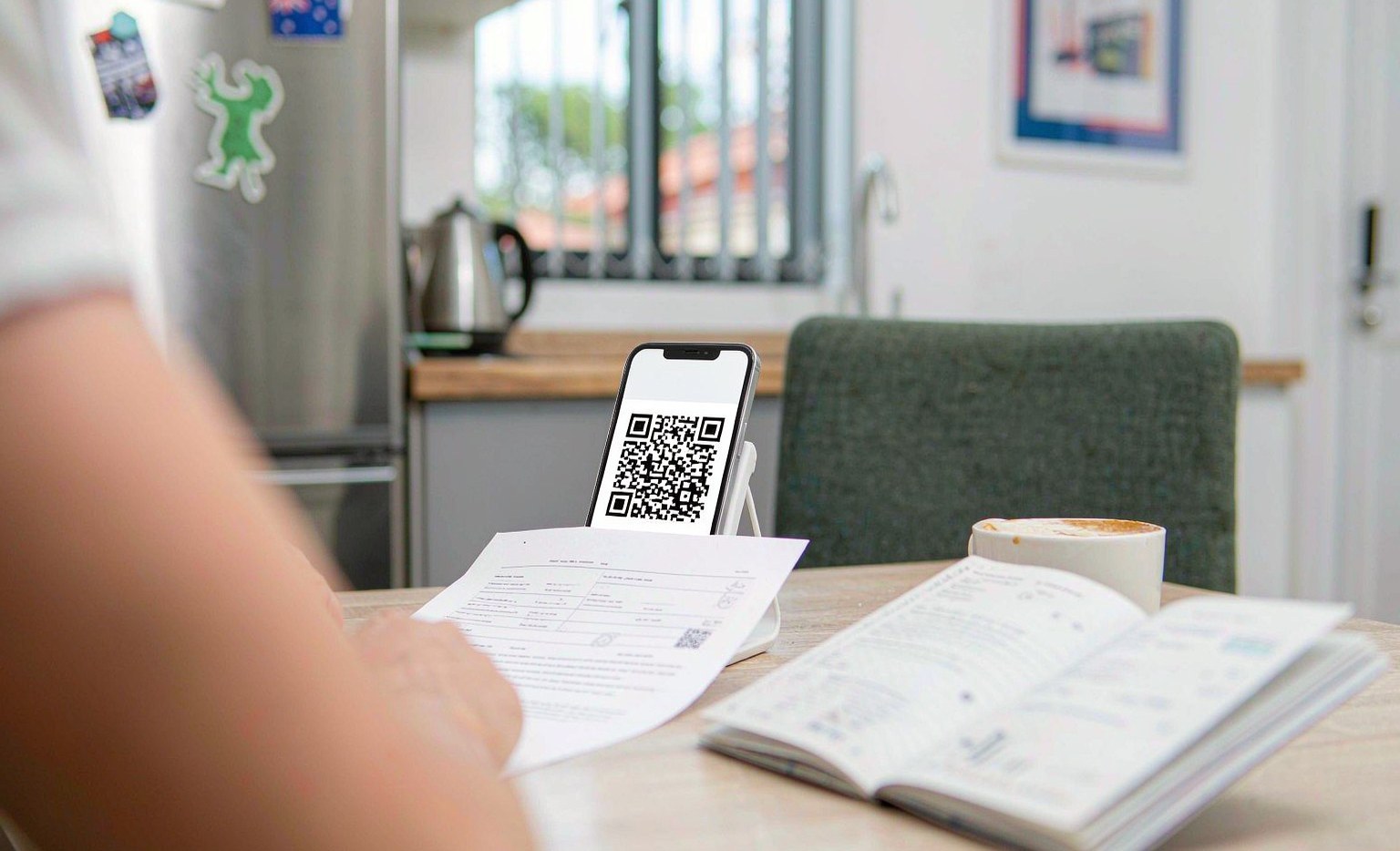
- Purchase your plan online – you’ll receive a QR code or manual activation link via email.
- Connect to Wi‑Fi and install the profile by scanning the QR code or entering the activation code.
- Label the eSIM clearly (e.g., “Spain Beach Data”) in your phone settings.
- If your plan activates “on first connection in Spain”, installation is complete. If it activates immediately, the timer starts from installation.
- Download offline Google Maps for your entire coastal region.
- Download your favorite playlists, podcasts, and entertainment for the flight and remote beach days.
- Take a screenshot of your QR code and store it in the cloud – you can reinstall if needed without internet.
If your chosen plan doesn’t work well at your specific beach
- Manual network selection: Go to
Settings > Cellular > Network Selection, turn OFFAutomatic, and try each available carrier manually. One may perform significantly better than the auto‑selected one. - Avoid peak hours: Schedule heavy downloads, updates, and video calls for early afternoon (when most tourists are on the beach) rather than evening peak hours.
- Switch to 4G only: In congested areas, turn off 5G (
Settings > Cellular > Cellular Data Options > Voice & Data > 4G) – sometimes 4G is less crowded and more stable. - Contact support – Roami offers 24/7 human help; other providers may have limited hours.
What if you run out of data mid‑trip?
- Top up instantly via your provider’s app – most allow this in minutes.
- Buy a second eSIM from a different provider as a backup (a 5‑10 GB plan is a cheap safety net).
- Fall back to hotel Wi‑Fi for heavy usage, reserving your mobile data for essential navigation and messaging.
- Reduce usage – lower streaming quality to 480p, disable auto‑play on social media, turn off cloud photo backup over mobile data.
Spain Beach eSIM: What Travelers Ask Most
What is the best Spain eSIM for beach holidays?
The best option for Spain is a multi‑network eSIM with auto.switching across Movistar, Orange, and Vodafone. For Costa del Sol and Costa Blanca, this provides the most reliable coverage; for Canary Islands, prioritize Movistar and Orange; for Balearics, Orange leads in Ibiza and Mallorca. Roami is our top recommendation.
Does Spain eSIM work in the Canary Islands?
Yes. Movistar and Orange have the widest coverage across the archipelago. 5G is available in resort areas on Tenerife, Gran Canaria, Lanzarote, and Fuerteventura. Remote beaches and natural parks may have limited or no signal.
What is the best eSIM for Costa del Sol?
Orange and Movistar lead in the Málaga‑Marbella corridor; Vodafone is strong in Puerto Banús and Sotogrande. A multi‑network plan with auto‑switching provides the best experience, especially during evening congestion in August.
How much data do I need for a week at the beach?
Light users: 10‑15 GB; moderate: 20‑30 GB; heavy: 30‑50 GB. Double these estimates if sharing via hotspot. Hotel Wi‑Fi quality varies, so having a reliable eSIM backup is recommended.
Can I use my Spain eSIM in the Balearic Islands?
Yes. Orange is strongest in Ibiza and Mallorca’s resorts; Movistar leads in Mallorca’s mountainous north‑west. Menorca has the most consistent but lowest speeds due to Biosphere Reserve infrastructure limits.
Does Spain eSIM work on remote beaches?
Coverage varies across Spain. Costa del Sol and Costa Blanca have good coastal coverage; Menorcan coves, Fuerteventura’s Cofete, and Cabo de Gata have limited or no signal. Download offline maps and entertainment before visiting these areas.
Can I buy a Spain eSIM at the airport?
Yes – the three Spanish networks have stores at major airports (Málaga AGP, Barcelona BCN, Palma PMI, Tenerife TFS). However, buying online before departure is usually cheaper and allows installation in advance.
What is the best eSIM for Spain and Portugal?
Crossing into Portugal or France mid-holiday? A regional Europe eSIM or a multi‑country plan avoids the switch — Orange Holiday Europe, Airalo Discover+ and the multi‑network providers cover both sides of the border on one profile.
Can I hotspot with my Spain beach eSIM?
Most providers allow it, but Holafly caps hotspot at 1GB per day on unlimited plans. Airalo, Orange Holiday and Vodafone Travel all permit tethering, as do the multi‑network plans — confirm before purchasing if you plan to share.
Do I need a Spanish phone number?
Most travelers to Spain don’t – WhatsApp, iMessage, and other messaging apps work over data. If you need a number for restaurant reservations (ElTenedor) or ride‑hailing (Cabify), Orange Holiday Europe includes a French (+33) number.
What is the best Spain travel eSIM for digital nomads in the Canary Islands?
A multi‑network plan with at least 20‑30 GB. Movistar covers the widest area; Orange is faster in tourist zones. Auto‑switching gives you the best of both.
Can I get a prepaid Spain eSIM for a beach holiday?
Yes – prepaid plans are available in Spain from Movistar, Orange, and Vodafone at airports and stores, and from international providers like Airalo, Holafly, Nomad, and Roami online. Prepaid is ideal for 1‑4 week stays.
Coastal Data Notes and Seasonal Caveats
Beach coverage in Spain is the least stable kind there is, and the reason is capacity rather than reach. A resort that holds five bars in February can congest in August, when the same cell serves three times the handsets; a cove that shows full coverage on a map may have none once cliff walls are in the way. Everything below describes the pattern, not a promise for your particular week.
That is also why the advice on this page leans on plan choice more than on carrier choice. You cannot control which mast serves your beach, but you can control whether your plan is able to move to a different one, and whether you have enough data that a slow afternoon does not end your connectivity.
Seasonal notes re-checked on 8 October 2026. Device support is a hardware question — the GSMA eSIM list and Apple’s eSIM guidance both cover it model by model.
Coastal coverage notes re-tested against operator maps each season; device compatibility and plan details cross-checked as of 8 October 2026. Seasonal capacity and prices both move, so check the provider’s page for the plan that is live on your dates.
Ready for your beach holiday? Compare Spain eSIM plans for coverage from the Costa del Sol to the Canary Islands, and check our coverage guide for the strongest carrier on your specific stretch of coast.